Enjoy a glimpse of history through old images of Kilmarnock, in East Ayrshire, Scotland.
Dean Castle
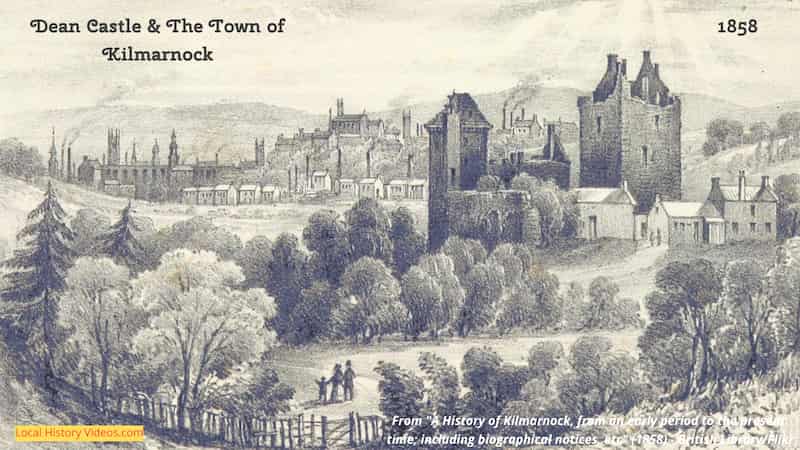
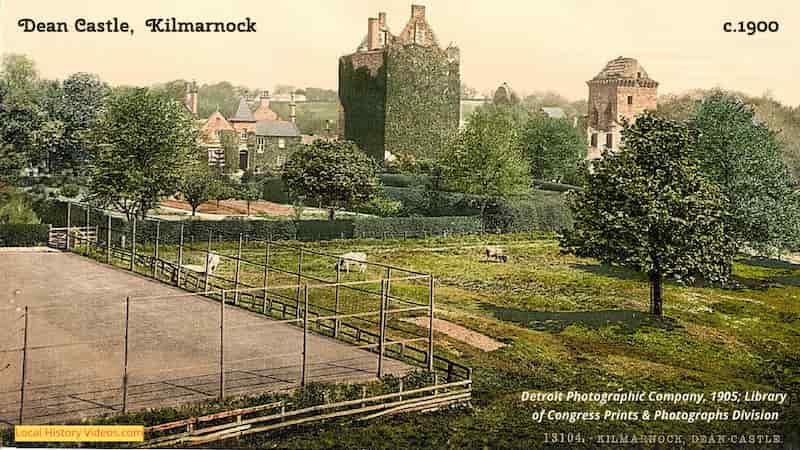
Dean Castle, the stronghold for the Boyd family, was built sometime around 1350 A.D.
It was traditionally known as Kilmarnock Castle, until its name changed to Dean Castle in about 1700 A.D. The Dean is the term for a wooded glen, so the new name reflected the setting around the historic fortress.
The image from 1858 shows a ruined structure without a roof. Visitors today can enjoy the redeveloped castle, which was used as "Beaufort Castle" in the TV series "Outlander".
Old image of Dean Castle and the Town of Kilmarnock, from "A History of Kilmarnock, from an early period to the present time; including biographical notices, etc" (1858) - British Library/FlikrOld photo of Dean Castle at Kilmarnock, taken sometime between 1890 and 1905. Part of the Detroit Publishing Company catalogue of 1905, now held by the Library of Congress Prints and Photographs Collection
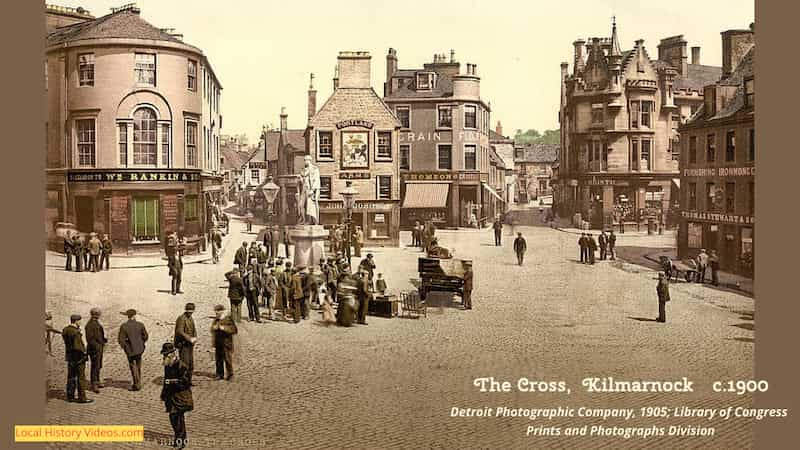
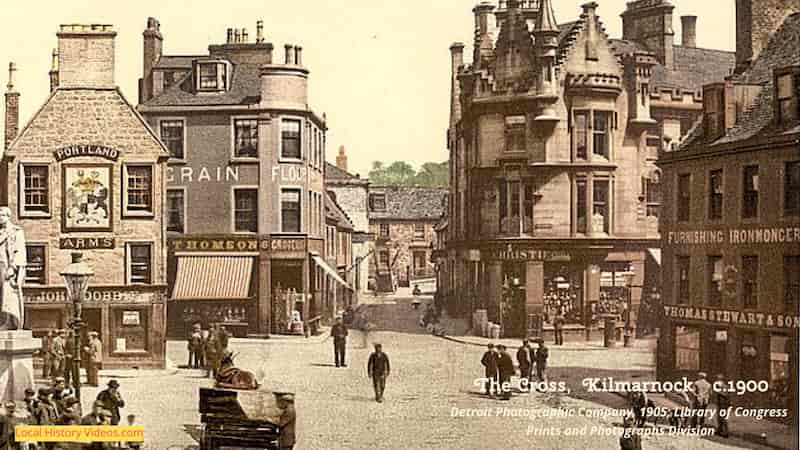
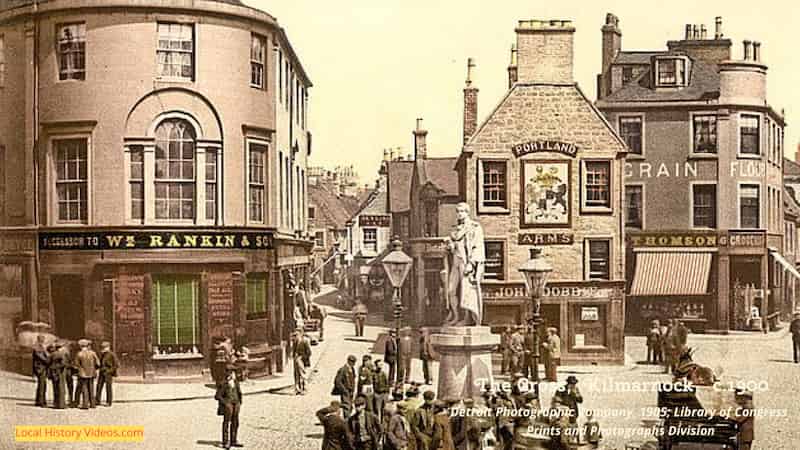
The Cross, Kilmarnock
This old photochrom was taken sometime between 1890 and 1905.
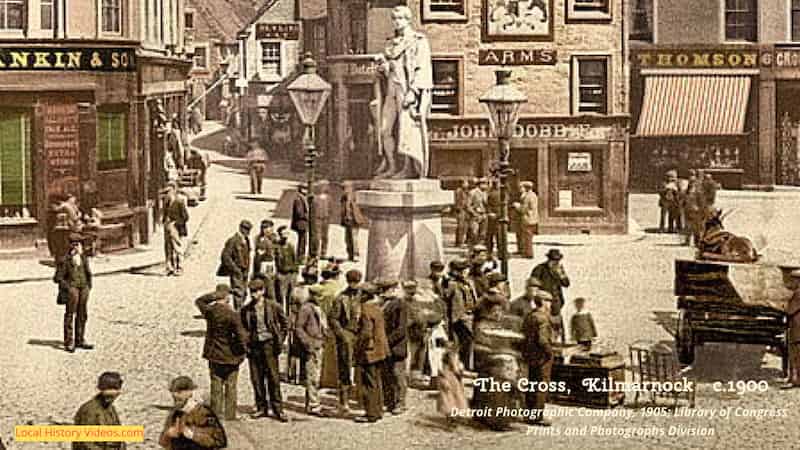
There's so much activity going on at The Cross that day, and the local businesses are nicely captured, that I've added three closeups for a better view too.
Old photochrom of The Cross in Kilmarnock, taken sometime around the early 20th Century. Part of the Detroit Photographic Company catalogue of 1905, held by the Library of Congress Prints and Photographs DivisionCloseup of the old photochrom of The Cross in Kilmarnock, taken sometime around the early 20th Century. Part of the Detroit Photographic Company catalogue of 1905, held by the Library of Congress Prints and Photographs DivisionCloseup of the old photochrom of The Cross in Kilmarnock, taken sometime around the early 20th Century. Part of the Detroit Photographic Company catalogue of 1905, held by the Library of Congress Prints and Photographs DivisionCloseup of the old photochrom of The Cross in Kilmarnock, taken sometime around the early 20th Century. Part of the Detroit Photographic Company catalogue of 1905, held by the Library of Congress Prints and Photographs Division
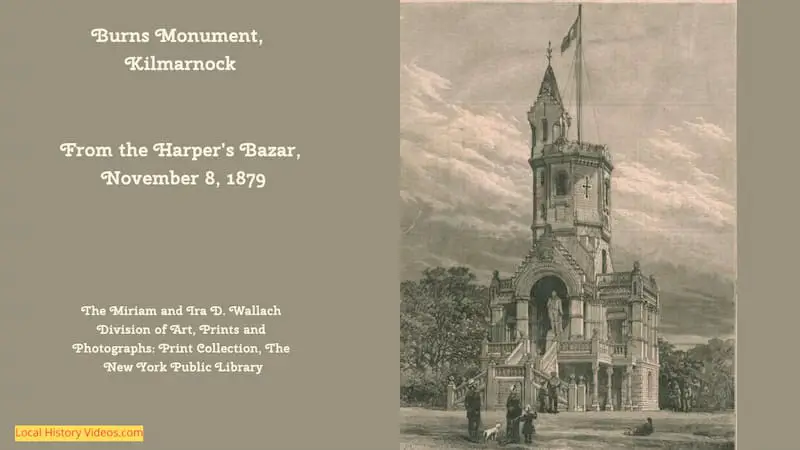
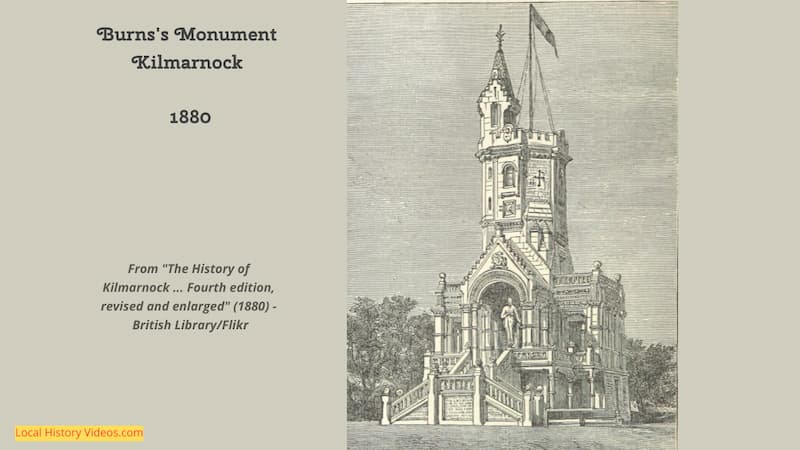
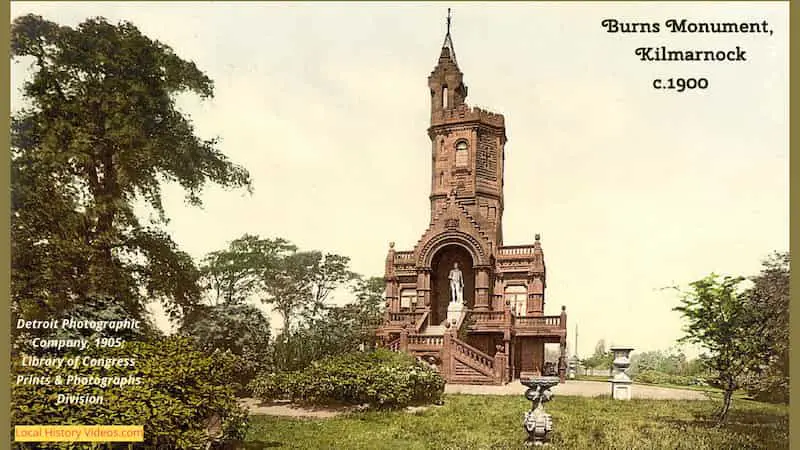
Burns Monument
Kilmarnock's commemoration to the world famous Scottish poet Robert Burns was completed in 1879.
It is located on an elevated position in Kay Park, to the east of the town centre.
Old illustration of the Burns Monument in Kilmarnock, printed in the Harper's Bazar on November 8, 1879, now held by the New York Public LibraryBurns's Monument Kilmarnock, from "The History of Kilmarnock ... Fourth edition, revised and enlarged" (1880) - British Library/FlikrOld photo of Burns Monument in Kilmarnock, taken sometime between 1890 and 1905. Part of the Detroit Publishing Company catalogue of 1905, now held by the Library of Congress Prints and Photographs Collection
Old Maps of Kilmarnock
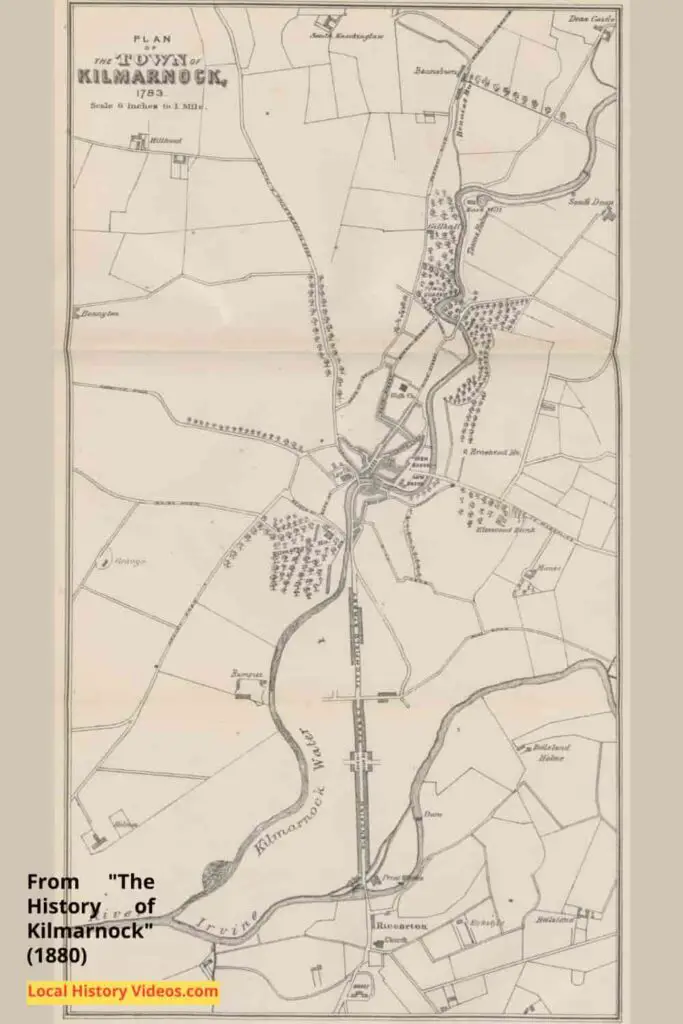
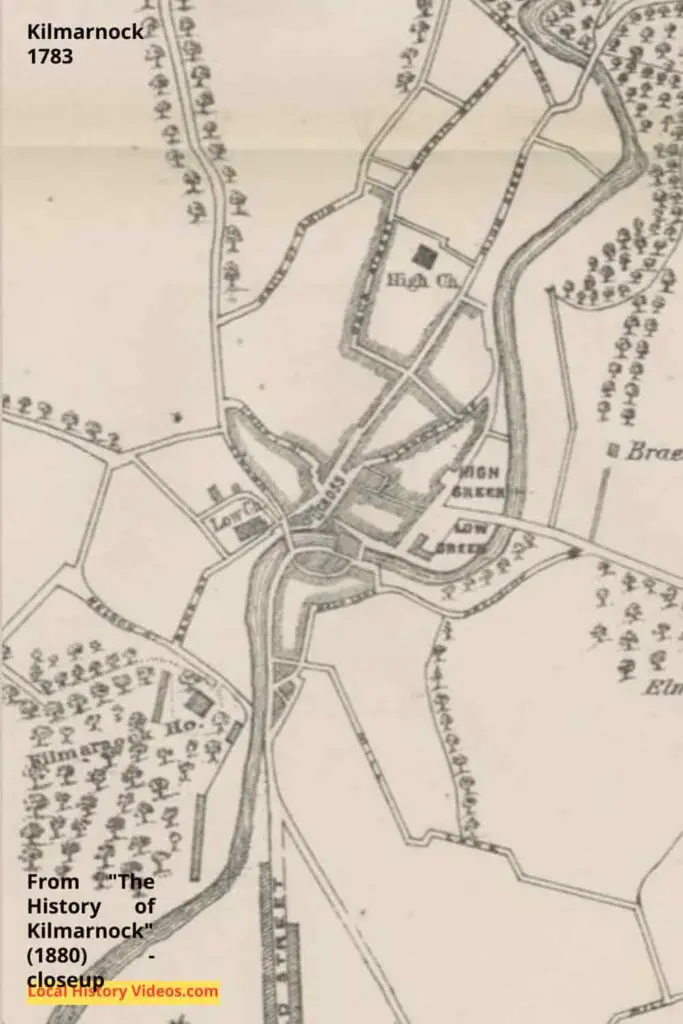
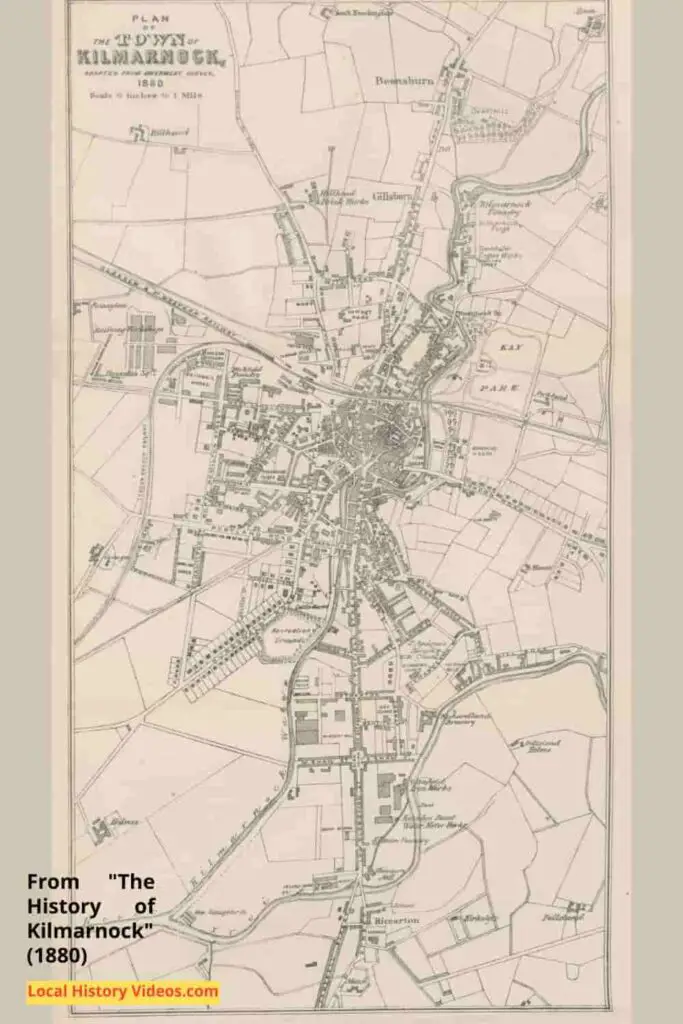
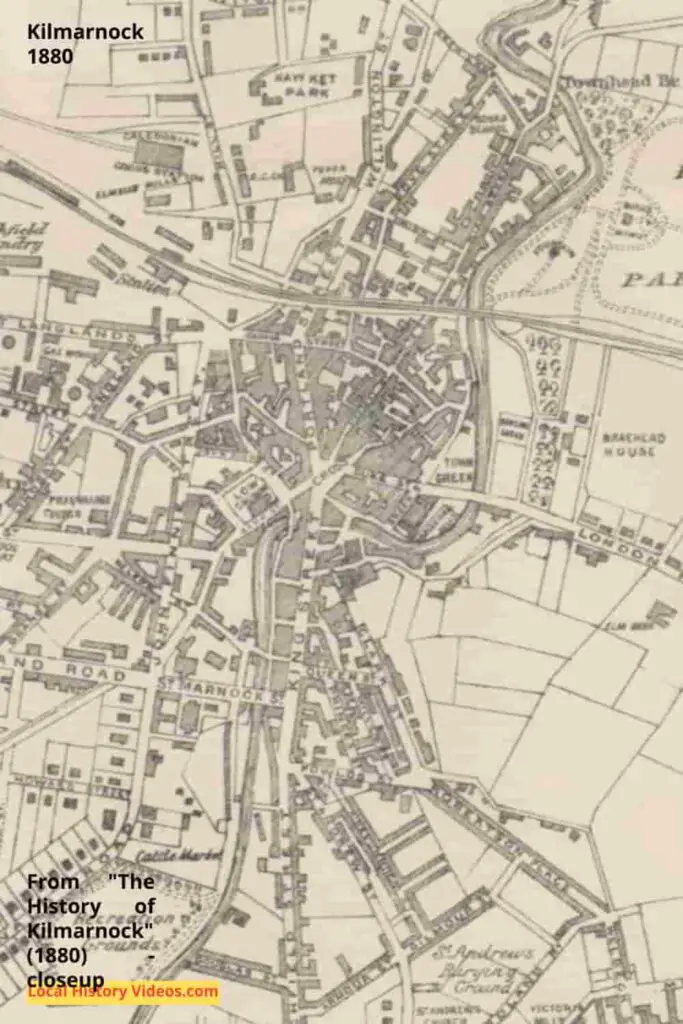
Charting Kilmarnock's rapid growth over a century, the 1880 publication "History of Kilmarnock" included a historic map of the town from 1783, and then a contemporary one from 1880.
I've added a close up of the area around the Cross from both of these maps.
Old Map of Kilmarnock in 1783Closeup of old Map of Kilmarnock in 1783Old map of Kilmarnock, 1880Closeup of the 1880 Map of Kilmarnock
Old Photos of Kilmarnock
Enjoy a video showcasing a selection of old photos of Kilmarnock's past people and places.
Old Photographs Kilmarnock Ayrshire Scotland - tourscotland on YouTub
Glimpse history through old images of Spokane , Washington. Spokane in 1902 Panorama of Spokane, Washington, taken sometime around 1902. With thanks to the Library of Congress Prints and Photographs Division. Closeup of two extracts from the panorama of Spokane, Washington, taken sometime around 1902. With thanks to the Library of Congress Prints and Photographs Division. Closeup of two extracts from the panorama of Spokane , Washington, taken sometime around 1902. With thanks to the Library of Congress Prints and Photographs Division. Spokane ’s Davenport Restaurant Spokane ’s Davenport Restaurant was an internationally renowned venue which offered popular Sunday afternoon tea dances. Old photo of the Davenport Restaurant in Spokane, Washington, taken around 1908. With thanks to the Library of Congress Prints and Photographs Division. Closeup of an extract of the old photo of the Davenport Restaurant in Spokane , Washington, taken around 1908. With thanks to the...
The story of Manchester, New Hampshire, is the definitive narrative of the American Industrial Revolution. It is a chronicle that spans centuries, transforming a vital Indigenous fishing ground into a planned corporate utopia that housed the world's largest textile empire, before navigating a devastating collapse and emerging as a modern high-tech hub. At the absolute center of this transformation was the Merrimack River, the Amoskeag Falls, and a corporate behemoth known as the Amoskeag Manufacturing Company. Manchester, New Hampshire, composed from sketches taken near Rock Raymond by J.B. Bachelder, 1855. 1. Ancient Waters and Colonial Beginnings (Pre-1810) Long before brick mills lined the Merrimack River, the geography of modern-day Manchester was shaped by the Amoskeag Falls . Dropping approximately 55 feet over a short distance, the roaring rapids created a massive natural barrier for migrating fish—and an invaluable resource for human inhabitants. Walking along the street ...
Nestled dramatically beneath the sheer granite cliffs of Cathedral Ledge in Carroll County, North Conway, New Hampshire , is famous as a premier gateway to the White Mountains. Unlike a standalone municipality, North Conway is a distinct major village legally contained within the broader township of Conway. Its evolution from a fertile Abenaki riverfront valley into a haven for 19th-century fine artists and a pioneer of American winter sports represents one of the most successful resort transitions in New England. Old photo of the skimobile up Cranmore Mountain, North Conway, NH - circa 1940 Part of the Original 1765 Royal Charter: North Conway’s municipal history began on October 1, 1765 , when colonial Governor Benning Wentworth issued a formal royal charter establishing the township of Conway. Named directly to honor Henry Seymour Conway—a prominent British statesman and military commander who championed colonial interests in Parliament—the grant required early pioneer...
Comments
Post a Comment